Two people walk into a dispensary and buy the same product. One has a calm, focused evening. The other spends two hours feeling anxious on the couch. The number on the label was identical. The difference had nothing to do with potency. It had everything to do with which cannabinoid they actually needed. When comparing CBD vs THC, most people frame it as a question of strength. The real question is function. These two compounds act on your body through completely different pathways, and understanding that changes how you shop.
TL;DR
THC and CBD act on your body through completely different pathways. Knowing what each one does — and at what dose — turns a dispensary visit from guesswork into a decision you can stand behind.
THC (tetrahydrocannabinol) is the primary psychoactive compound in cannabis. It binds directly to CB1 receptors in the brain and central nervous system, producing a high alongside effects like pain relief, relaxation, and sleep onset. CBD (cannabidiol) is non-intoxicating. It does not bind directly to those same receptors, instead working indirectly across more than 65 molecular targets to support calm, reduce inflammation, and in some cases, counteract the anxiety that THC can cause.
What does THC actually do in the body?
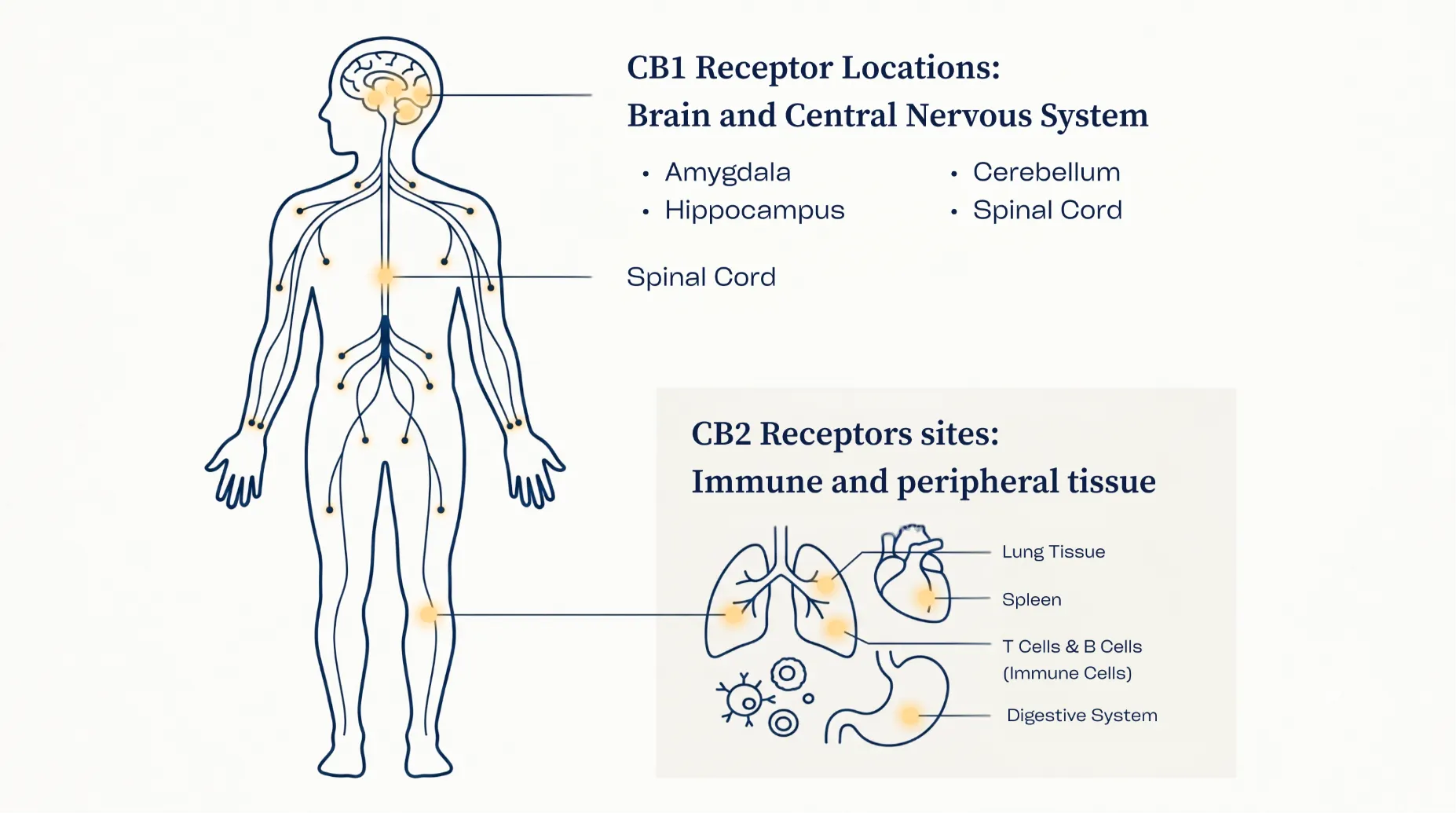
THC works by binding directly to CB1 receptors in the brain. These receptors sit across the central nervous system and play a role in how you process mood, memory, movement, and pain, according to research published in Psychology Today in October 2025. When THC activates them, the result is the high cannabis is known for: altered perception, elevated mood, reduced pain sensitivity, and at higher doses, a shift in time and space awareness.
This same mechanism is what makes THC effective for certain outcomes. People use it for sleep because it can accelerate how quickly you fall asleep. It is used for pain because it interrupts how the brain registers pain signals. It stimulates appetite because CB1 receptors overlap with hunger regulation pathways, as explained in a 2021 Harvard Health overview of the endocannabinoid system.
THC also binds to CB2 receptors, though the effects there are different. CB2 receptors are concentrated in peripheral organs and immune tissue, not in the brain, so this binding contributes to anti-inflammatory effects without adding to the psychoactive experience, as noted by Project CBD in their endocannabinoid research timeline.
One thing worth being direct about: high doses of THC can cause anxiety in some people. This is not a defect. It is a dose-dependent response. A 5mg edible and a 25mg edible are not the same experience, and the gap between them matters more than most labels communicate.
What does CBD do differently from THC?
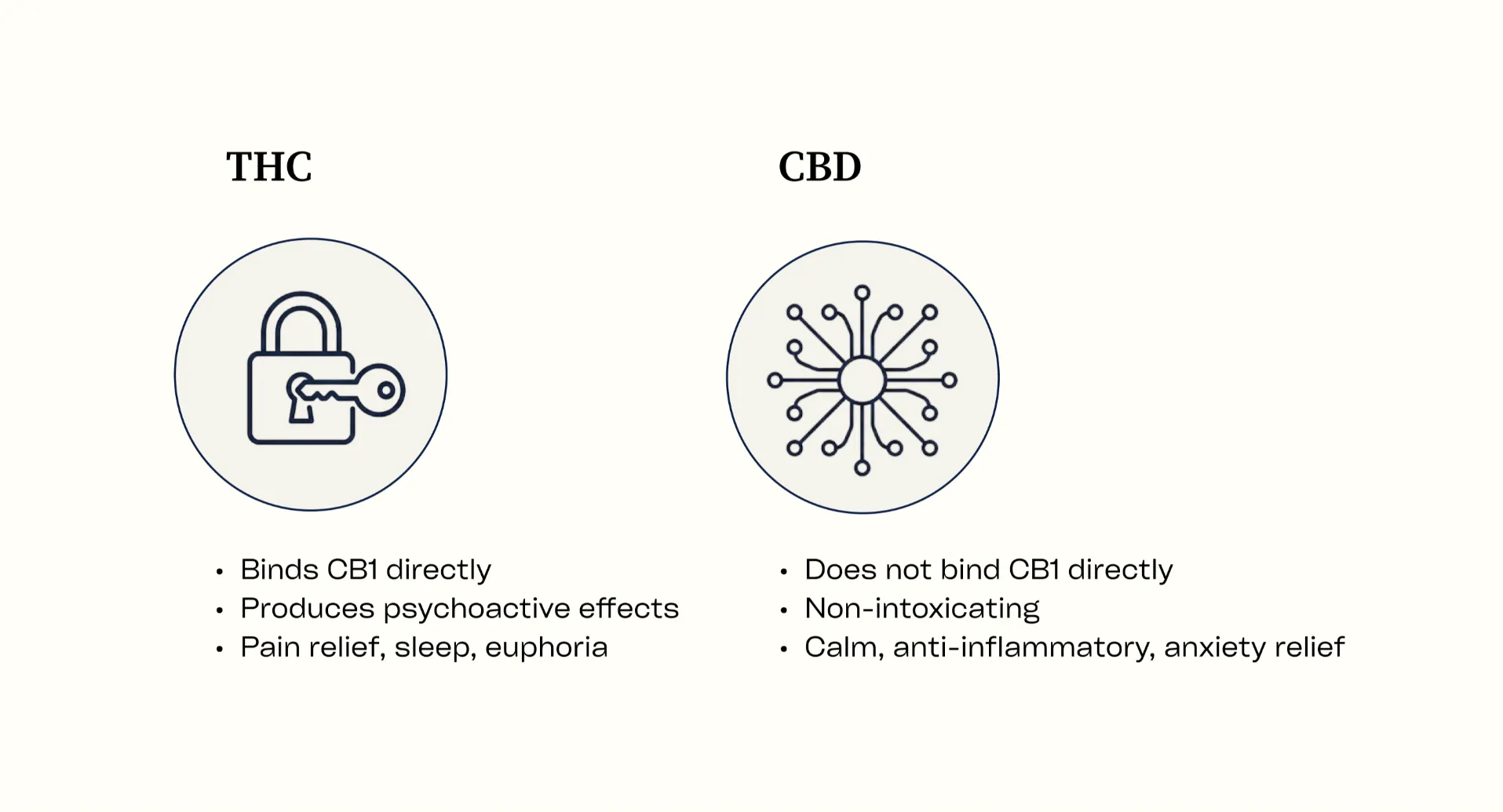
CBD does not bind directly to CB1 receptors. This is the single most important fact to understand about how it works. Because it does not activate those receptors the way THC does, it does not produce intoxication. It does not get you high.
What CBD does instead is more layered. Project CBD describes it as a "negative allosteric modulator" of the CB1 receptor, meaning it can actually reduce the intensity of THC binding rather than replace it. It also works by slowing the breakdown of anandamide, one of the body's own naturally occurring endocannabinoids. When anandamide stays active longer in the system, the effects include reduced anxiety, a quieter stress response, and lower levels of general tension. The scientific literature identifies over 65 molecular targets for CBD, according to research reviewed by Project CBD, which helps explain why its effects span so many areas.
CBD also interacts with serotonin receptors (specifically 5-HT1A) and vanilloid channels (TRPV1), as noted in a peer-reviewed review published in the National Center for Biotechnology Information (NCBI) in 2024. These pathways are connected to mood regulation, inflammation, and pain perception.
The practical result: CBD can help with anxiety, muscle tension, inflammation, and general calm. It does this without altering cognition. For someone who wants the benefits of cannabis without the high, or who finds high-THC products produce anxiety, CBD gives the system something to work with rather than redirecting it entirely.
One data point to keep in mind. A 2025 meta-analysis published in Sleep Medicine Reviews, covering six randomized trials with 1,077 participants, found that CBD-only formulations did not show the same sleep improvements as formulations combining THC and CBN. If the primary goal is sleep, CBD alone may not be the strongest tool.
THC vs CBD at a glance
These two cannabinoids serve different purposes, and the right choice depends on what you are trying to achieve. Effects also depend on dose, product format, and the terpene profile of the specific product. The table below gives a clear starting point.
| Attribute | THC | CBD |
|---|---|---|
| Psychoactive | Yes | No |
| Primary receptor | CB1 (direct binding) | Indirect; 65+ molecular targets |
| Main effects | Euphoria, pain relief, appetite, sleep onset | Calm, reduced anxiety, anti-inflammatory |
| Best suited for | Evening wind-down, pain, sleep, social occasions | Daytime calm, anxiety, inflammation, first-timers |
| Modifies the other? | High doses can increase anxiety | CBD can reduce THC-induced anxiety |
| NY legal source | Licensed dispensary only | Hemp-derived (Cannabinoid Hemp Program) or licensed dispensary |
| Typical onset (edible) | 30 to 90 minutes | 30 to 90 minutes |
| Typical duration | 2 to 6 hours | 4 to 8 hours (effects are more subtle) |
How do you choose between THC and CBD for what you actually need?
The answer starts with your intent. Three use cases come up most often.
Sleep. THC is better supported by research here than CBD alone. A 2025 meta-analysis in Sleep Medicine Reviews, covering six randomized controlled trials and 1,077 participants, found that formulations combining THC and CBN significantly improved subjective sleep quality. CBD-only formulations did not produce the same result. If sleep is the goal, a product with both THC and CBN is the more evidence-backed choice.
Anxiety and daytime calm. This is where the comparison between cbd vs thc gets more nuanced. Low-dose THC can reduce anxiety. High-dose THC can cause it. CBD tends to reduce anxiety at most doses without that risk, which makes it more predictable for daytime use. A 1:1 ratio product, combining both cannabinoids at equal parts, gives the system the calming effects of CBD alongside a small amount of THC. Many people find this combination more stable than either alone, because CBD can soften THC's sharper edges.
Pain and inflammation. Both cannabinoids play a role. THC works centrally, through CB1 receptors, by changing how the brain registers pain signals. CBD works peripherally, through CB2 receptors in immune and organ tissue, by reducing the inflammation that often underlies pain. A ratio product combining both covers more ground than either in isolation, according to the receptor pathway review published in a 2024 NCBI peer-reviewed article.
The entourage effect is the term used to describe how cannabinoids work better together than separately. It is a useful framework when a single cannabinoid is not producing the outcome you want. Licensed dispensaries carry products at specific ratios - 1:1, 2:1 THC to CBD – precisely for this reason.
Please note
No product should be presented as a treatment for any condition. If you are managing a specific health issue, speak with a doctor. The choices above are about experience and outcome, not medicine.
What does the THC or CBD label on a New York cannabis product actually tell you?
New York State requires all licensed cannabis products to display activated THC and CBD values on the label. "Activated" means the decarboxylated figure – the amount of cannabinoid that is actually bio-available after processing. This is the number that reflects what is in the product, according to the New York cannabis packaging and compliance guidelines updated in 2026.
What the label cannot tell you is how the product will make you feel. New York law prohibits any health or medical claims on cannabis packaging. A product cannot state that it relieves anxiety, helps you sleep, or reduces pain. The label is a factual chemical snapshot. The interpretation requires context.
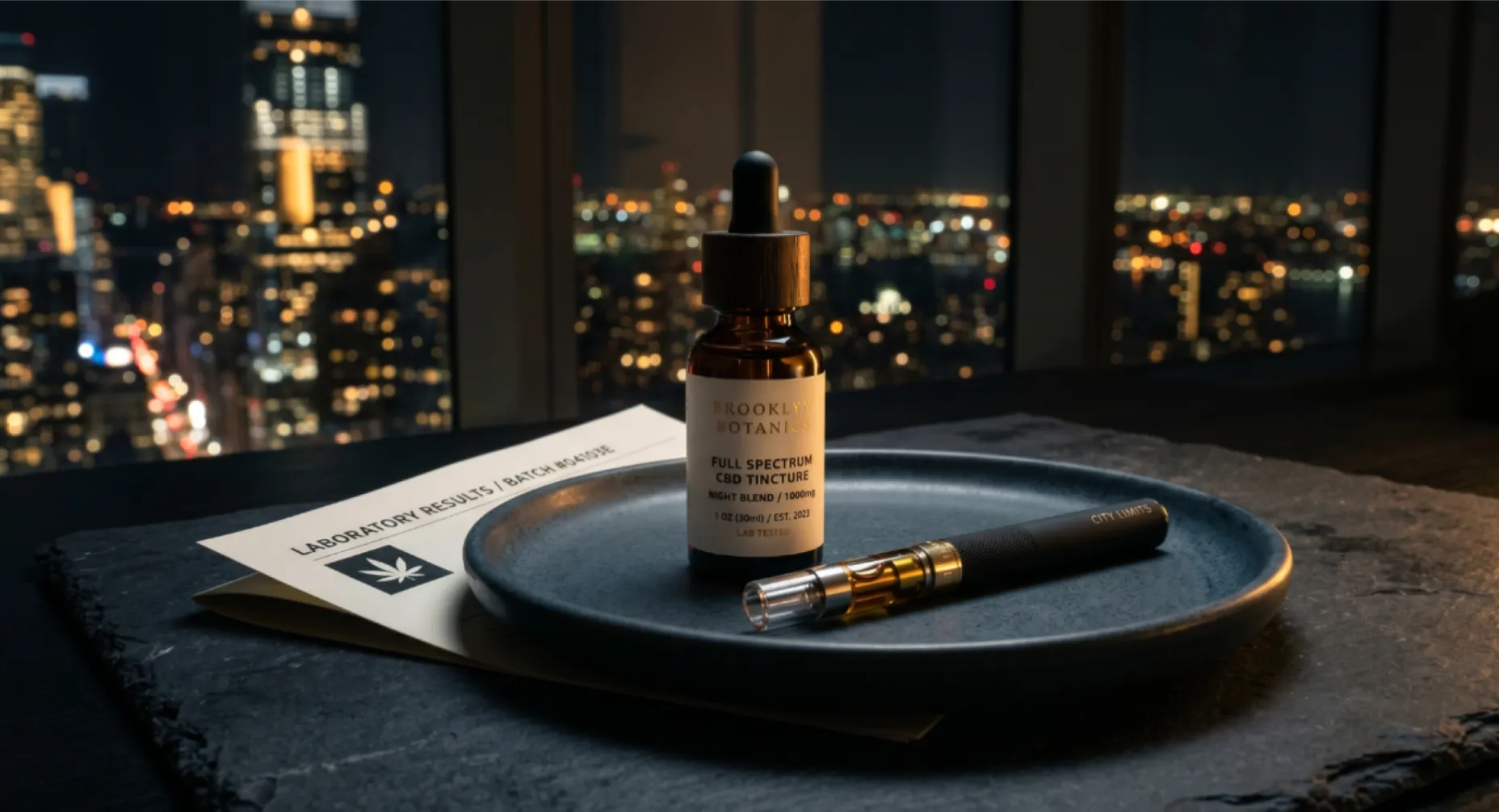
This is where a Certificate of Analysis (COA) goes further. A COA shows the complete cannabinoid and terpene profile for that specific batch, including minor cannabinoids like CBN and CBG, and terpenes like myrcene or limonene that influence how a product lands. Licensed New York dispensaries are required to make COAs available on request. Many now provide QR codes on packaging that link directly to lab results.
For edibles, there is one additional number to note. Adult-use recreational products in New York are capped at 100mg of THC per package. For anyone new to edibles, this context matters. A 5mg piece from a 100mg pack is a very different starting point than taking the whole thing. The cap is a safeguard, and understanding it helps you dose with intention.
According to the New York State Department of Health BRFSS survey released in June 2025, approximately 14.7 percent of New York adults report using cannabis in the past 30 days, with edibles as the second most common method after smoking. Most of those people are making product decisions without a full picture of what they are choosing. The COA changes that.
Choosing with clarity
The label tells you what is in the product. It does not tell you what the product will do for you. That second part depends on which cannabinoid you choose, at what dose, in what format, and for what reason.
THC and CBD are not interchangeable. They are complementary. Understanding where each one works best is what turns a dispensary visit from guesswork into a decision you can stand behind.
The rest is a conversation with someone who knows what is on the shelf.
Please note
This content is for educational purposes only and does not constitute medical advice. Cannabis affects individuals differently. Must be 21 or older to purchase in New York State.
FAQs
Both can reduce anxiety at the right dose, but they work differently. THC at low doses (2.5 to 5mg) can calm anxiety for many people. At higher doses, it can increase it. CBD tends to reduce anxiety across a broader dose range without that risk. A 1:1 ratio product is often the most predictable starting point for anxiety, because CBD can moderate the sharper effects of THC.
Yes. CBD can reduce some of THC's less desired effects, including anxiety and excessive sedation. Many products are formulated with both cannabinoids at a set ratio for this reason. The idea that these compounds work better in combination than in isolation is sometimes referred to as the entourage effect and is supported by the receptor pathway research published through NCBI in 2024.
No. CBD does not bind directly to CB1 receptors in the brain, which is the mechanism that produces the high associated with cannabis. It can produce a sense of calm or reduced tension, but this is distinct from intoxication. The two experiences feel different and are produced through different biological pathways.
Start with 2.5 to 5mg for edibles and wait a full 90 minutes before deciding whether to take more. The most common mistake is taking a second dose at the 45-minute mark when the first has not yet peaked. For inhaled products, one or two draws is a reasonable starting point. Dispensary staff can help you calibrate based on the specific product format.
THC products and marijuana-derived CBD are available only at licensed adult-use dispensaries in New York. Hemp-derived CBD in non-intoxicating forms is also available through retailers authorized under the state's Cannabinoid Hemp Program. Licensed dispensaries provide lab-tested products with COAs and staff guidance. As of early 2026, there are 582 licensed dispensaries open across New York State, according to data from Chronogram's March 2026 market report.
Visit JD's Jungle
Visit JD's Jungle in New York. Tell our team what you are trying to achieve — sleep, calm, pain, or something in between. We will match you to the right product and pull the COA so you can see exactly what you are getting.
Find a locationReferences
- Lee, M. A. (2023). How CBD works. Project CBD. https://projectcbd.org/science/how-cbd-works/
- Salamon, M. (2021). The endocannabinoid system: Essential and mysterious. Harvard Health. https://www.health.harvard.edu/blog/the-endocannabinoid-system-essential-and-mysterious-202108112569
- Noonan, D. (2025). The science of the endocannabinoid system. Psychology Today. https://www.psychologytoday.com/us/blog/an-interpersonal-lens/202510/the-science-of-the-endocannabinoid-system
- NORML. (2025). Clinical trials: THC and CBN, but not CBD, associated with improved sleep quality. https://norml.org/news/2025/10/09/clinical-trials-cannabis-formulations-dominant-in-thc-and-cbn-but-not-cbd-associated-with-improved-sleep-quality
- New York State Department of Health. (2025). Report on adult cannabis use. https://www.health.ny.gov/press/releases/2025/2025-06-25_adult_cannabis_use_report.htm