
You pick up a sleep gummy at a New York dispensary and flip it over. THC: 5mg. CBN: 10mg. You already know what the THC is. But what is CBN, and why does it keep showing up alongside it on every nighttime formula? It is showing up for a reason. CBN is a minor cannabinoid that has moved from the background of cannabis science into formulated sleep products, and the research behind that shift is real, if still early. This post covers what CBN actually is, what the science says, and what to look for when you are standing in front of the shelf.
TL;DR
CBN is the cannabinoid showing up in sleep gummies across New York. Here is what it is, what the science actually says, and what to look for when you are standing in front of the shelf.
CBN, or cannabinol, is a minor cannabinoid that forms naturally as THC breaks down over time when exposed to oxygen, light, or heat. Unlike THC, it is non-intoxicating at standard doses. It interacts with the body's endocannabinoid system and has been linked in preclinical and early human studies to improved sleep quality, particularly when combined with THC.
Where does CBN come from and what makes it different from CBD?
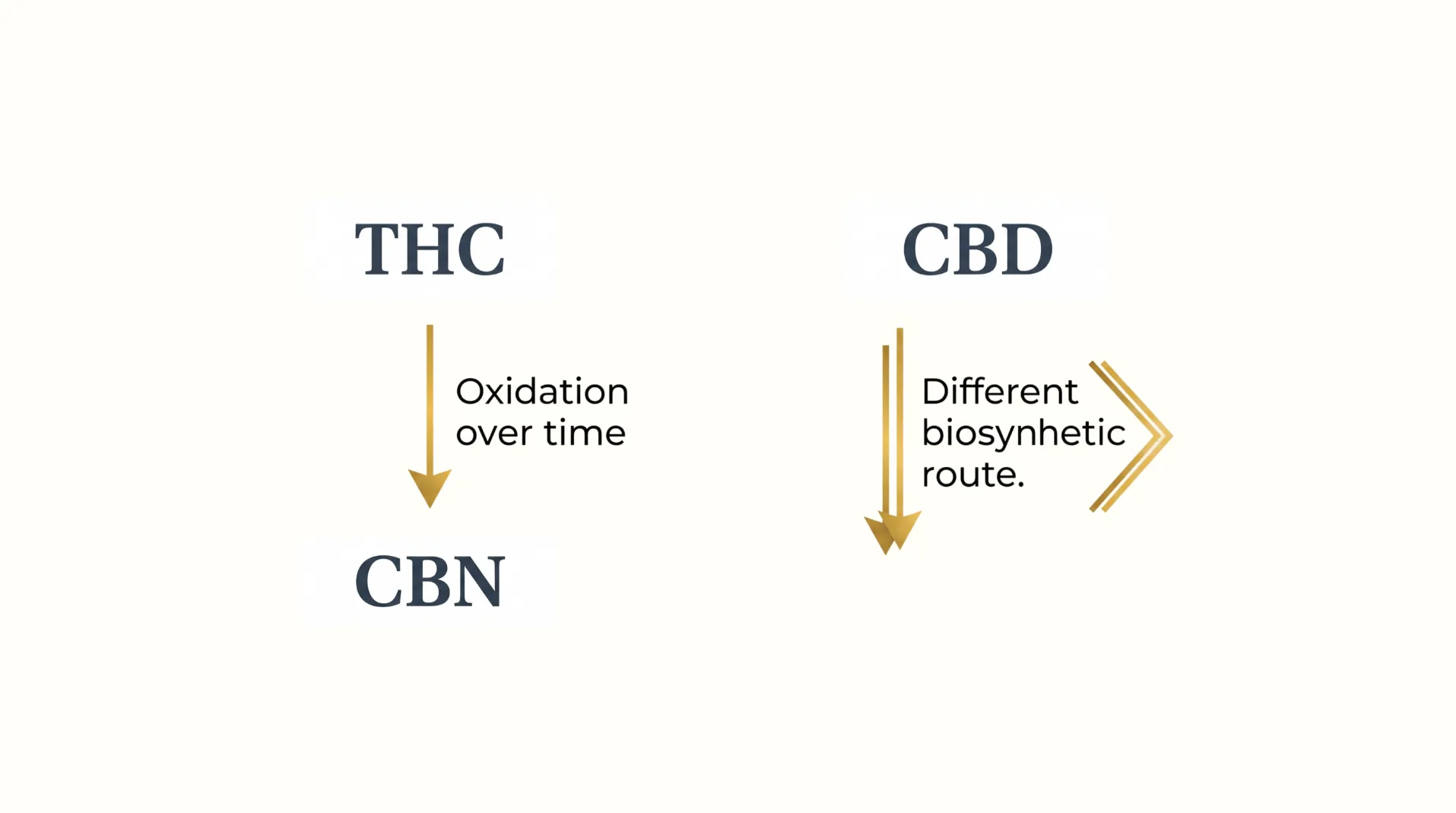
CBN is not harvested directly from the cannabis plant the way CBD or THC is. It forms as a byproduct when THC degrades. Expose cannabis to oxygen, heat, or light over a period of time, and THC slowly converts into CBN. This is the reason aged cannabis has long been associated with a heavier, sleepier effect; the THC has had time to break down.
CBD comes from a completely different place in the plant's chemistry. It has its own biosynthetic pathway and does not depend on THC at all. The two cannabinoids are structurally distinct, act on different receptors, and produce different effects in the body.
That difference matters practically. CBD has been widely marketed as a sleep aid, but the clinical data has not kept up with the marketing. A 2025 meta-analysis published in Sleep Medicine Reviews, which reviewed six randomised controlled trials involving 1,077 participants, found that CBD-only formulations did not produce a statistically significant improvement in sleep quality (Santos da Silva et al., 2025). CBN formulations, particularly when paired with THC, did.
Modern CBN products do not rely on aged flower. Manufacturers now isolate and concentrate CBN through controlled oxidation or extraction, producing consistent, measurable doses in a lab-tested format.
What does the research actually say about CBN and sleep?
For decades, the connection between CBN and sleep was mostly anecdote. People noticed that older cannabis tended to produce a heavier, more sedative effect. The assumption was that CBN was responsible. But assumption is not evidence, and until recently, there was no objective data to confirm it.
That changed in November 2024. Researchers at the University of Sydney's Lambert Initiative for Cannabinoid Therapeutics published a study in the journal Neuropsychopharmacology. It was the first study to use objective measurements, EEG-based polysomnography, to show that CBN increases sleep in rats, specifically by increasing total sleep time and time spent in non-REM (deep) sleep. Lead author Professor Jonathon Arnold described it as the first objective evidence that CBN modifies sleep architecture in a beneficial way (University of Sydney, 2024). The study noted that CBN binds only weakly to CB1 receptors directly, but that an active metabolite of CBN does interact with those receptors more significantly.
One limitation is worth stating clearly: this was a preclinical study conducted in rats. Human trials are ongoing.
The human-facing evidence is building separately. The 2025 meta-analysis in Sleep Medicine Reviews found that across six randomised controlled trials, formulations containing THC and CBN were associated with meaningful improvements in self-reported sleep quality. CBD-only formulations were not (Santos da Silva et al., 2025). This matters because it pushes back against the assumption that any cannabinoid will help with sleep. The data points to a specific pairing, not a general category.
What is CBN in gummies and what does the label actually mean?
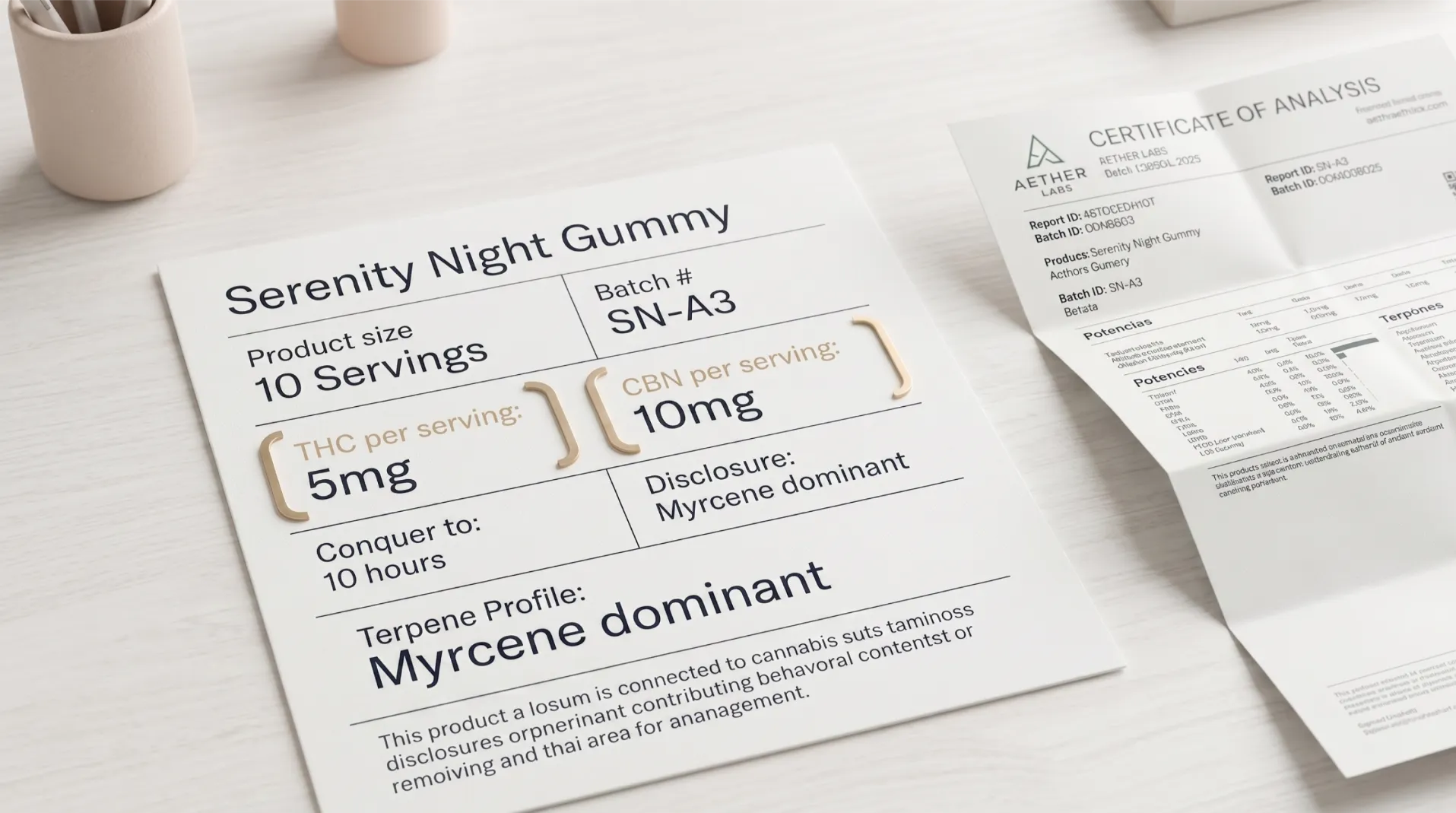
When a gummy lists both a THC amount and a CBN amount per serving, those two numbers together define the product's sleep profile, not just its potency.
In New York, adult-use edibles are regulated by the Office of Cannabis Management. Each serving is capped at 10mg of THC. CBN does not carry a separate legal cap, so the CBN content varies by product and formulation. A gummy with 5mg THC and 10mg CBN will behave differently from one with 10mg THC and 2mg CBN, even if the THC is the same or similar.
The ratio shapes the experience. Higher CBN relative to THC tends to mean more sedation with less of the psychoactive effect associated with THC alone. Products designed for sleep typically lean in that direction.
Reading the Certificate of Analysis (COA) matters more than reading the packaging. Every licensed New York dispensary is required to carry products tested by an OCM-permitted lab. The COA shows the actual cannabinoid content confirmed by testing, not just what the label claims. For a CBN sleep gummy, look for the CBN percentage confirmed by the lab result. Also check the terpene profile: myrcene, found in many indica-leaning products, is associated with a settling, sedative character and is a useful secondary signal that a product is formulated for rest.
How does CBN compare to THC and CBD for sleep?
Each of the three most common cannabinoids interacts with sleep differently. Knowing the difference helps you pick the right product rather than guessing from a label that says "nighttime formula."
| CBN | THC | CBD | |
|---|---|---|---|
| Origin | Forms as THC breaks down through oxidation | Primary intoxicating cannabinoid in cannabis | Derived via separate biosynthetic pathway from hemp or cannabis |
| Psychoactivity | Non-intoxicating at standard doses | Intoxicating, dose-dependent | Non-psychoactive |
| Sleep role | Increases deep (NREM) sleep; reduces nighttime awakenings | Helps with sleep onset; may reduce REM sleep with long-term use | No statistically significant solo sleep effect per 2025 meta-analysis |
| Research status | Preclinical (rat study, 2024) plus early human trials; promising | Established, widely studied | Established for anxiety and pain; limited for sleep alone |
| Common NY formats | Gummies, tinctures, blended nighttime capsules | Flower, gummies, vapes, tinctures | Oils, topicals, gummies |
THC helps you fall asleep faster. CBN appears to help you stay asleep longer and reach deeper sleep. CBD, despite its popularity, has not demonstrated the same sleep-specific effect in controlled trials. The strongest research signal currently points toward THC+CBN combinations, which is exactly why that pairing has become the standard in formulated sleep gummies.
What should you look for in a CBN sleep product at a New York dispensary?
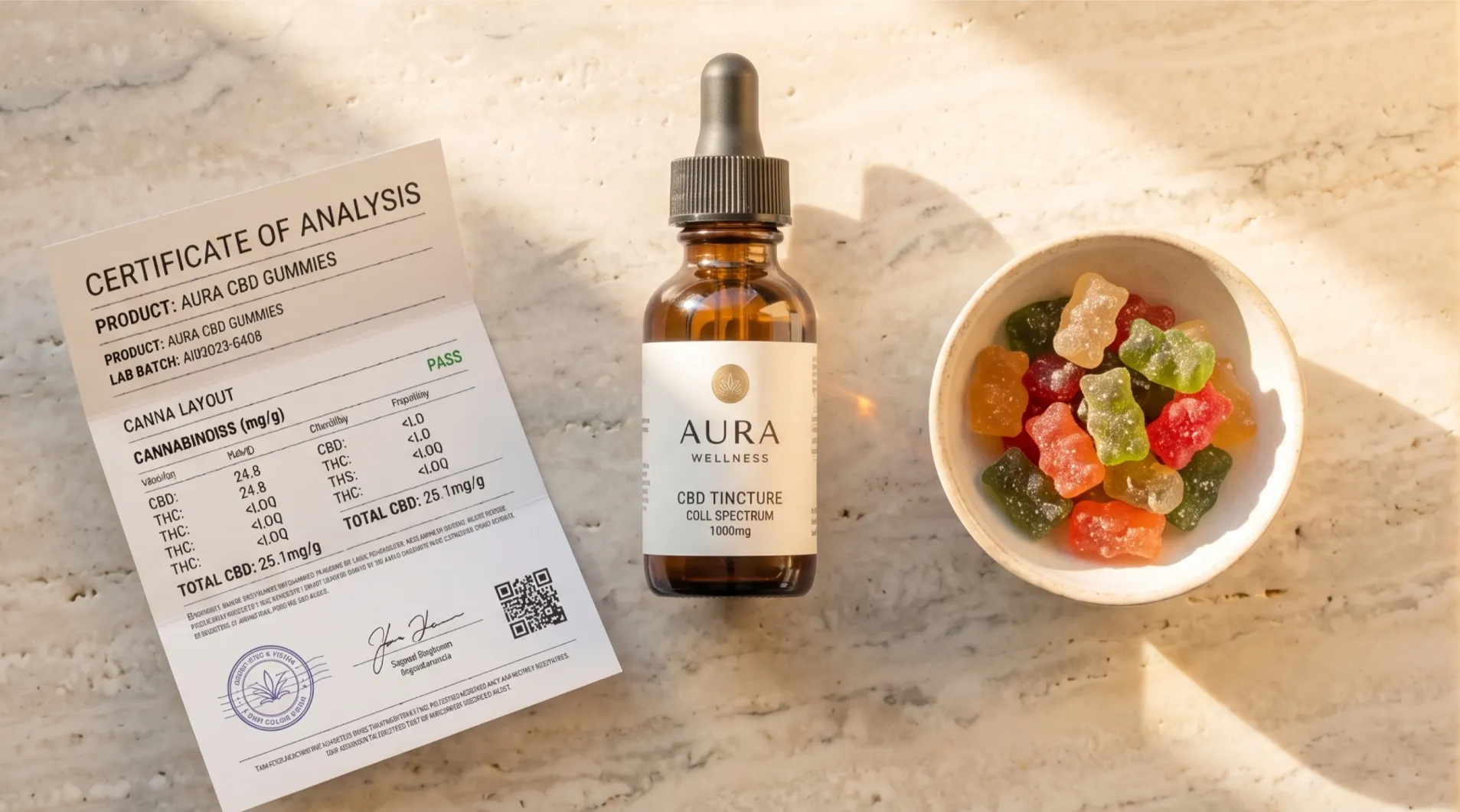
New York's licensed dispensaries carry lab-tested products that meet OCM standards. Every product on the shelf has a COA. That is the baseline. What you do with that information is up to you.
Start with the cannabinoid profile. Look for a product that lists both THC and CBN content per serving, with the CBN confirmed by lab testing, not just the front label. The two numbers together tell you more than either one alone.
Think about dosing carefully. For anyone new to edibles or returning after a break, 2.5 to 5mg THC is a sensible starting point. The OCM sets a 10mg per serving cap for adult-use products, that is a ceiling, not a recommended dose. CBN amounts in formulated sleep products commonly range from 5mg to 20mg per serving. Higher does not automatically mean better; your body's response to CBN will depend on your experience level and what is keeping you awake.
Timing matters as much as dose. Gummies typically take 45 to 90 minutes to take effect. Taking one 60 to 90 minutes before you want to be asleep gives the product time to work. Taking it too late and then redosing before the first dose peaks is the most common mistake with edibles.
Ask the budtender at JD's Jungle what CBN sleep formulations are currently available. Different products suit different needs. A customer managing chronic insomnia has different requirements than someone who sleeps fine but wakes at 3am and cannot settle back down. A conversation about what is actually disrupting your sleep is a better starting point than browsing by milligrams alone.
Conclusion
CBN belongs in sleep products for the same reason any ingredient earns its place in a well-formulated product: there is evidence behind it. The research is still building, but it is pointing in a clear direction. THC+CBN combinations produce measurable improvements in sleep quality in ways that CBD-only formulations have not matched in controlled trials.
The question is no longer whether CBN has a role in sleep. The question is which specific formulation, ratio, and dose makes sense for you, and that depends on your experience, your sleep patterns, and what is available at your dispensary.
Please note
This content is for educational purposes only and does not constitute medical advice. Cannabis affects individuals differently. Must be 21+ to purchase in New York State. If you are experiencing persistent insomnia, consult a licensed healthcare provider.
FAQs
CBN and CBD are both cannabinoids, but they are structurally different and work differently in the body. CBN forms as THC breaks down over time. CBD comes from a separate part of the plant's chemistry entirely. CBD is widely used for anxiety and pain. CBN has shown more specific promise for sleep, particularly in combination with THC, where CBD alone has not produced the same effect in clinical trials.
The early evidence is promising. A 2024 University of Sydney study published in Neuropsychopharmacology was the first to objectively show that CBN increases sleep in rats, boosting deep sleep time and overall sleep duration (University of Sydney, 2024). A 2025 meta-analysis in Sleep Medicine Reviews found that THC+CBN formulations improved subjective sleep quality across six randomised human trials, while CBD-only formulations did not show a statistically significant effect (Santos da Silva et al., 2025). Human trials with CBN are ongoing. The current evidence is promising, not conclusive.
Dosing varies by product and by person. Studies have used anywhere from 6mg to 20mg of CBN per night. If you are new to edibles, start at the lower end and give the product a full 60 to 90 minutes before drawing any conclusions. The budtending team at a licensed New York dispensary can help you figure out a reasonable starting point based on what is available and what your specific sleep issue is.
The CBN listed on a gummy label shows the amount of cannabinol per serving. Combined with the THC amount, it gives you the full cannabinoid profile of the product. Both numbers shape how the gummy performs as a sleep aid. A product with 5mg THC and 10mg CBN will behave differently from one with 10mg THC and 2mg CBN, even at a similar total milligram count.
Yes. CBN products are available at licensed adult-use dispensaries across New York State. All products sold at OCM-licensed dispensaries are lab-tested, and certificates of analysis are available for every product. Look for products that list CBN content clearly per serving, and confirm the number against the COA.
CBN at standard gummy doses is non-intoxicating. It does not bind to CB1 receptors strongly enough to produce the euphoric effect associated with THC. Most people describe the effect as a calm physical relaxation without impairment. Products that also contain THC will have an intoxicating component based on the THC dose, not the CBN.
Visit JD's Jungle
Visit JD's Jungle to explore our selection of lab-tested CBN sleep formulations. Every product on our shelf meets New York OCM standards, and our team can help match you to the right formula based on what you actually need from your night.
Find a locationReferences
- Santos da Silva, G. H., et al. (2025). Effectiveness of cannabinoids on subjective sleep quality. Sleep Medicine Reviews. https://pubmed.ncbi.nlm.nih.gov/40929927/
- University of Sydney. (2024). Sleepy cannabis: First objective study to show cannabinol increases sleep. https://www.sydney.edu.au/news-opinion/news/2024/11/12/cannabinol-increases-sleep-objective-measure-lambert.html
- Arnold, J. C., et al. (2024). A sleepy cannabis constituent. Neuropsychopharmacology. https://www.ncbi.nlm.nih.gov/pmc/articles/PMC11736144/
- NORML. (2025). Clinical trials: THC and CBN, but not CBD, associated with improved sleep quality. https://norml.org/news/2025/10/09/clinical-trials-cannabis-formulations-dominant-in-thc-and-cbn-but-not-cbd-associated-with-improved-sleep-quality/